'The philosophers have only interpreted the world in various ways. The point however is to change that'

EU Ref results - Our reactions...

Friday, 24 June 2016

Early this morning, we awoke to the tragic news that the Great British public had voted to leave the European Union, to "take back their country". Last night, as all the polls and the markets were anticipating a Remain win, our hearts and minds were somewhat at ease, and Nigel Farage, who was already articulating his excuses in case of a Remain win, and putting the blame on the extended registration deadline, was a great source of reassurance. Yet when I woke up at 2.20 AM (to grab a bite before starting my fast), and turned on the television, imagine my horror at the news of pollsters projecting a 97% chance of a Leave win! My heart dropped faster than the pound did, and I truly felt like it was the end of the world (jk!).
A victory for Remain would've saved us
 from seeing more of this man on our screens...

I truly believe that this is a sad day for the UK as a whole. Despite attempts to reassure the country, nobody, not even the mighty ole' politicians know what the terms of the exit will bring. Yet, one of the issues which angers me the most is the proportion of votes according to age. Putting aside the fact that 16 and 17 year olds were NOT allowed to vote, as it is a whole other debate and one which we are extremely passionate about, the fact that almost 75% of 18 to 25 year olds voted to Remain is frustrating, at best. The realization that the vote which was decided by the oldies, will effect us youth the most as we will have to live with the result in the long term is completely and utterly bizarre. 

As Tim Farron said today that 
"...what a tragedy that other 
voters have decided to damage 
their (young people's) future."

David Cameron's resignation, which perhaps was to be expected, did come as a great shock. I feel as though his speech was the most passionate we have ever seen and heard him throughout the course of the campaign, and, although reluctantly, I do admit that his teary eyes and breaking voice did tug at my heartstrings and I felt a tremendous amount of sadness on his behalf (my mother, who is a staunch Labour voter told me that she actually cried after hearing it...). I think his decision to resign in October is a rather noble one, yet the rising possibility of Boris Johnson succeeding him as PM is rather daunting. 


"I love this country and I feel 
honoured to have served it and 
will do everything I can in future to
help this great country succeed.
 Thank you very much."

An emotional David Cameron as he announces his
resignation on the 24th of July


Our lesson on the EU referendum

Thursday, 23 June 2016

Unless you've been living under a rock or have been restricted access to any newspaper, the much-awaited EU referendum is upon us.
Thursday 23rd June is possibly the most important referendum in British history. It will dictate whether the United Kingdom will hold a position within the European Union.
The million dollar question in all of this is, what exactly is the EU???


The European Union is an economic and political union consisting of 28 member states, five years after WWII ended, both France and Germany devised a plan to make sure that both neighboring countries will not go to war with one another. As a result, six countries Belgium, France, Germany, Italy, Luxembourg and the Netherlands signed a deal to form a unified market system and pool their coal and steel resources in 1950. The United Kingdom joined the EU on 1st January 1973 making it a historic moment in British history.


"Better late than never," we thought to ourselves as we prepared to teach a lesson to a class full of wide-eyed Year 8 students about the EU referendum that occurred today. 


To start off, we eased into the issue asking what they already knew. Much to our surprise, we find out they knew quite a lot with one student in particular who was extremely well-informed. Pretty impressive. 

We taught them the basics of a referendum, what it is and what it entails. We described to the students on why the EU had originated and what the effects of leaving the EU actually are. Though these 13-year-olds did hold some sense of what it is, it's unfortunate that many youngsters seem to have no clue concerning the importance that the EU holds. With this lesson, we hoped we can at least educate a small group of the future electorate. Though they themselves will not be able to vote upon the issue, hopefully, they can help inform their parents/relatives and at least be mildly aware of what exactly is happening in their country. 
We explained to the curious students that back in 2013, David Cameron promised that if his political party, the Conservatives, won the next general election, then he would let voters have their say on whether or not the UK should stay in or leave the European Union. We also told them about the pros and cons of leaving/ remaining the EU are where leaving the EU would result in an immediate cost saving as the country would no longer contribute to the EU budget but of course this can be completely rebutted by the single market included with membership in the EU, shared intelligence with all member states and the skilled workers that derive from migrant workers.


Through the mini-referendum, we held in the class, its safe to assume that majority of the students would choose to remain in the EU, with only 2 rebelling against the majority.

The successful lesson only makes us more curious for the results from today, the polls currently show how divided the public are on the issue, with an almost 50/50 split. 


Unless its completely inaudible, the enthusiastic scream of 'stay in' could perhaps be shown to the public before voting today. Rather listen to 13 year olds and not Nigel Farage no?


The Freedom Press bookshop

Saturday, 18 June 2016


Suraiya at the entrance
The first stop on our tour of the great ideological sites in London was the Freedom Press bookshop, one of the oldest Anarchist publishing house in Europe, and the largest in the country. Located in an area all of us are familiar with, it took us a long while to actually find it. Incidentally, we had passed by it several times, while staring at the maps on our phones before one of us actually looked up and noticed the dull sign which had an arrow pointing down a narrow alleyway (admittedly it did look a tad bit shady...).

...with the hardly noticeable
sign
The Freedom Press was set up by Charlotte Wilson, a British Anarchist, and Peter Kropotkin. Kropotkin was an anarchist, born into Russian nobility (fun fact: he was a Prince by title), a man who served in the Czar's army, yet identified as an anarchist at the age of 30, and joined the illegal group, the Tchaikovsky Circle, named after one of it's members, (yes, he was a relative of the renowned composer). He was active in many European countries, like Switzerland and France, all of which he fled from or was arrested. He eventually settled in England in 1886, and as we Brits are known for our tolerance (even back then it seems), he was able to stay till 1917, when he returned to Russia after the Bolshevik revolution which saw the end to the Tsarists regime. While in England, in 1886, together with Wilson, he set up an anarchist paper, The Anarchist, and later set up Freedom Press.

Freedom Press plays a key role in the history of anarchism in the UK. It helped to revive the anarchist movement in Britain after it's decline during WW1, during which the publication of Freedom, the anarchist publication was stopped. During WW2 however, Freedom Press began the publication of War Commentary, and resumed the publication of their other works. Nowadays, the publishing house is responsible for the production of many anarchist texts.

Autobiography of
renowned anarchist
Walking into the bookshop, I straightaway thought of an old, vintage bookshop. Every nook and cranny was filled with books, magazines, pamphlets and posters, all to do with the anarchist movement.The book which stood out to us all instantly was the autobiography of the anarchist Stuart Christie, titled "Granny made me an Anarchist". In the book, Christie talks of his grandmother's influence on his beliefs. He is famous for his attempt to assassinate the Spanish dictator General Franco in 1964 as a teen. His book mainly focuses on the Spanish Civil War of the 1930s, and the role of anarchists.

The bookshop, due to its controversial political stance, has been attacked several times in the past, most recently in 2013, when it was victim to an arson attack. In the 1930s it was under constant fire by fascist groups, leading to the installing of metal bars on the windows. The site is extremely important to the history of anarchism in Britain. The building itself, bearing the signs of previous attacks, illustrates the long-standing anarchist movement in the area, and what it has endured over the years.

Anarchist portraits along the alleyway...
Noam Chomsky on the bottom row anyone?


Links to visit


Apart from our fabulous blog educating you, we thought it may be useful to include other resources and miscellaneous items, some of our favourites are:


Everyday Sexism - a blog dedicated to allowing women to voice sexist experiences they've had, as described by Ms Bates experiences can range from being 'serious or minor, outrageously offensive or so niggling and normalised that you don’t even feel able to protest'. As so many women feel that there is no one to talk to about experiences which may seem 'normal' or 'not worth moaning about' (I've actually heard several individuals refer to sexism in this manner) a website like this is perfect.

2013 - Brave New Voices (Finals) - Denver Team Round #1


Possibly one of the best slam poetry I've ever heard


Vice documentary on current Labour leader Jeremy Corbyn


George Galloway obliterating the US senate


The Guido Fawkes blog : Published by Paul Staines, described by the Daily Telegraphs Gordon Rayner as "the blogger who strikes fear into Westminister", and "the journalistic equivalent of an arsonist" ( DAAYUM!) His aim is to  'to expose hypocrisy, corruption and impropriety in a parliament that he believes is rotten to the core.' He broken many stories regarding Tory scandals and smears. Ceratinly worth keeping an eye on...


The Intercept : It was launched in 2014 by Glenn Greenwald (the name may be familiar if you followed the Edward Snowdon story) and others and is dedicated to producing fearless, adversarial journalism. They believe "journalism should bring transparency and accountability to powerful governmental and corporate institutions" and their "journalists have the editorial freedom and legal support to pursue this mission." It's truly interesting and eye-opening as the articles published are regarding issues which would not be published in any mainstream media source, and exposes political corruption which most people do not even have a single clue about. Definitely worth checking out if you have an interest in World politics, especially issues regarding the current Middle Eastern crisis.


Books you should check out

Reading literature is probably the best way to be informed surrounding many of the different ideologies and ideas within our society
Some of our person favourites are


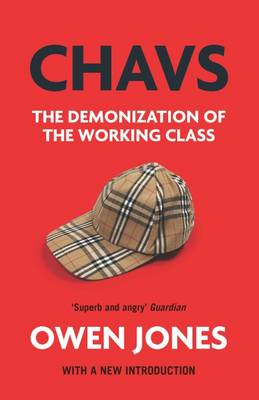
Chavs: The Demonization of the Working Class 

Owen Jones begins his book with an anecdote how his friend had humorously said 'It's sad that Woolworths is closing. Where will the chavs buy their Christmas presents?' Jones throughout the book describes the demonization the working class face through politics, media and society. While 'chav' my just seem a fitting term to use, reading this book may make you think twice.
Written by Owen Jones who also writes for the guardian (and not to mention is super cute wow) an extract of this amazing novel can be read here

The Communist Manifesto


As the name suggests, it is essentially the guide to what communism is. Originally published in Manifest der Kommunistischen Partei (“Manifesto of the Communist Party”) in Geman, the work had little impact on society. Its content and ideologies, however, had rising force within the 20th century and by 1950 nearly half the world’s population lived under a Marxist governments making it one of the most influential books in history. Its co-authored by Karl Marx and Freidrich Engels.

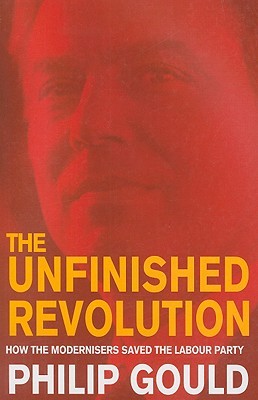
The Unfinished Revolution


This book written by Philip Gould explores New Labour from its development to the election defeat in 2010, commenting over the span of 25 years and six general elections. Unfortunately, the Labour strategist and Blair aide had passed away leaving this incredible book that describes Labours rise and falls in precise detail.


About...

This blog concerns everything you need to know about political ideologies! Join us in our tour of London, visiting sites of extreme ideological significance. Throughout our adventures in the greatest city in the world, we will be exploring notable landmarks on the subject of Feminism, Anarchism, Nationalism, Communism.


Feminism concerns the equality between the sexes, believing that both men and women should hold political, social and economic equality as opposed to the male-dominated society. However, as explored in this blog, it is evident that this is not as easily followed or understood by many, hopefully, you can learn about this complex yet much-needed ideology together with us.


Anarchism is a political theory believing all forms of governmental authority to be unnecessary and even an interference within society. It attempts to promote a co-operative system of organisation. Anarchism rejects all forms of authority as well as control, and though this may sound like a recipe for disaster, it seems to make much sense when understood properly.

Nationalism is based on the premise that the individual's loyalty to their nation surpasses all sense of importance towards other interests, and can also be described as an extreme form of patriotism, involving a feeling of superiority over other countries.

Communism is a political and economic ideology based on joint ownership with an absence of class. It can be thought of as the opposite of capitalism based on a utopian ideal of equality.


We hope the explanation of key terms could clear up some things for you, we can't wait to show you all the historical places we see within London surrounding all these ideologies.

14th June - A date to remember

Tuesday, 14 June 2016

Unknown to us, we had already begun our blogging contest. 14th June... Does that date sound familiar? Who'd have thought that we'd be standing on the grounds of Emily Davison's memorial at St. George's Church on the very day of the service as well as visit the grave of Emmeline Pankhurst on the 88th anniversary of her death. These two extremely influential and daring women paved the way to attaining our right to vote as female citizens within the UK. To think that a life was lost while fighting for the cause is tragic and yet, should be celebrated. Had it not been for the likes of the Suffragettes, who knows what kind of status and rights women would hold today. What our lives would be like today. Also, it was unfortunate that Emmeline Pankhurst passed only a few weeks shy of when the Conservative government's Representation of the People Act (1928) extended the vote to all women over 21 years of age on 2 July 1928. But her hard work, campaigning and strategies paid off because, look at where we are today. This was the first major advancement regards to women's rights. Though there is still a long way to go, I'd say that we were given a pretty big stepping stone to glide over by these women.
St. George's Church, Bloomsbury
 
 
St. George's Church, Bloomsbury
 
 
 Emmeline Pankhurst's grave - Brompton Cemetery